

Blog Center
What is the future development trend of lithium-ion battery materials?
2022-01-10
1. Electrode Materials
(1) Positive Electrode Materials
a. Based on traditional positive electrode materials (LiCoO2, LiMn2O4, LiFePO4, etc.), various derivative materials are developed through techniques such as doping, coating, adjusting microstructure, controlling material morphology, size distribution, specific surface area, and impurity content to comprehensively improve their specific capacity, rate capability, cycling stability, packing density, electrochemical, chemical, and thermal stability.
b. Ternary materials (LiNixCoyMn1-x-y) and lithium-rich materials (Mn-based and V-based) have significant development and research potential, as well as broad application prospects. Therefore, nickel-cobalt-manganese ternary materials, lithium-rich manganese-based and vanadium-based materials, high-performance composite positive electrode materials, and efficient energy-saving poly-anion group positive electrode materials are the mainstream of future lithium-ion battery positive electrode materials; developing more efficient and energy-saving new positive electrode materials to overcome and replace existing defective positive electrode materials is also a research hotspot.
c. A series of transition metal fluorides, oxides, sulfides, and nitrides have been confirmed to achieve multi-electron transfer and very high capacity. Electrode materials that achieve lithium storage functions based on conversion reaction mechanisms have specific capacities that are more than 2 to 4 times higher than traditional lithium-ion battery electrode materials based on lithium-ion insertion and extraction mechanisms. However, there are still many issues to be resolved, and research on these materials is relatively limited, with many unclear mechanisms.
d. According to the literature, there have also been studies on organic positive electrode materials, which are mainly divided into conductive polymers, sulfur-containing compounds, nitrogen-oxygen free radical compounds, and carbonyl compounds, etc. (I don't know much about the specifics, so if anyone has more information, I hope they can contribute).
Among them, P1 and P2 are organic electrode materials (which can be small molecules or polymers), M+, A+ are the doped positive and negative ions, usually Li+, Na+, (C4H9)4N+, and Cl\CICV, PF6-, etc. P1-M+, P2+A-, PI+A-, P2-M+ are the doped organic electrode materials.
(2) Negative Electrode Materials
a. Carbon-based Materials
Future important developments will focus on high-power graphite-based and non-graphite high-capacity carbon anodes (soft carbon, hard carbon, etc.) to meet the demands of future power and high-energy batteries. New carbon materials, such as carbon nanotubes (CNT) and graphene, due to their unique one-dimensional and two-dimensional flexible structures, excellent thermal and electrical conductivity, are being developed towards high energy density, high cycling characteristics, and low cost.
b. Non-carbon Materials
LTO can be compared to carbon-based materials, and metals or semiconductor materials such as Fe, Ge, Sn, Si are currently research hotspots, focusing on coating, surface modification, nanostructuring, and compounding to reduce their volume expansion and form stable SEI films. The specific capacity of these metal materials, especially Si, is very high and should be ideal positive electrode materials for the next generation of lithium-ion batteries. However, the issues of volume expansion and unstable SEI remain unresolved, which to some extent restricts their development. In particular, the volumetric energy density advantage compared to graphite anodes is far less than theoretical calculations, so there is not an absolute advantage in application. Ultimately, the negative electrode materials for lithium-ion batteries may likely revert to elemental lithium itself, with lithium metal being extensively researched for lithium-ion batteries, all-solid-state lithium-ion batteries, lithium-sulfur batteries, and lithium-air batteries.
2. Electrolyte Materials
The focus is on improving the voltage window of the electrolyte, reducing costs, expanding the temperature range of the electrolyte, enhancing the ionic conductivity of solid-state electrolytes, and controlling the formation of stable SEI films.
(1) Liquid Electrolytes:
Currently, LiPF6 is generally used, with EC plus one or more linear carbonates as solvents. Various types and scenarios are tested by adding different additives and using different solvents and replacing different lithium salts, as the working temperature range of the LIPF6/EC:DMC electrolyte system is -20 to 50°C. There are also many attempts to use ionic liquids, which have a wider temperature range, lower vapor pressure, good electrochemical performance, and electrochemical stability, but are very expensive (Professor Dai Hongjie’s aluminum-ion battery in Nature used one such ionic liquid). Additionally, the development of gel/solid-state electrolytes; high-pressure electrolytes are also being developed to solve issues through solvent purification, using ionic liquids, fluorinated carbonates, and adding positive electrode surface film additives, and developing solid electrolytes can significantly improve the voltage range.
(2) Gel Electrolytes
Commonly used gel-type polymer electrolyte matrices include: polyacrylonitrile (PAN), polyethylene oxide (PEO), polymethyl methacrylate (PMMA), polyvinylidene fluoride (PVDF), etc. Gel-type polymer electrolytes have less environmental pollution and better safety performance, making them highly favored in the battery market. In recent years, the trend has been to obtain electrolytic membranes with high porosity, low resistance, high tear strength, good acid-base resistance, and good elasticity through modification with nanoparticles (common inorganic fillers include SiO2, Al2O3) and copolymerization or blending.
(3) Solid Electrolytes
Solid electrolytes are generally referred to as fast ionic conductors, requiring high ionic conductivity, low electronic conductivity, and low activation energy. To be honest, I believe solid electrolytes should be the ultimate solution for lithium-ion electrolytes, as their development aims to solve all current issues with lithium-ion electrolytes, thereby fundamentally addressing safety issues, increasing energy density, cycling stability, service life, and reducing battery costs.
3. Development and Outlook
When the issues of lithium metal dendrites and safety are resolved, lithium metal is likely to become the ultimate negative electrode material for lithium-ion batteries. The following diagram is from a literature source discussing the development plan of lithium-ion batteries from a theoretical calculation perspective, transitioning from lithium-ion batteries to lithium metal batteries, and then to lithium fuel cell batteries. Therefore, based on this, considering the annual increase in energy density for lithium-ion batteries, the future development trend of rechargeable lithium-ion batteries may be:
A new generation of lithium-ion batteries using high-capacity cathodes, high-voltage cathodes, and high-capacity anodes, such as lithium-ion batteries with LiNi1/2Mn3/2O4xLi2MnO3(1–x)LiNi1/3Co1/3Mn1/3O2 as the cathode and high-capacity Si-based materials as the anode.
Rechargeable lithium-ion batteries with metallic lithium as the anode. The working voltage of fluorinated graphite (CF)n is 2.9V, with a lithium storage capacity of 800mAh/g. The Li/(CF)n battery has a high mass energy density, but it cannot be cycled currently. Other lithium-ion batteries, such as Li/FeF3, Li/MnO2, and Li/FeS2, still do not fully meet the comprehensive performance requirements for applications in terms of cycle life and safety.
The first to be realized is likely to be a rechargeable lithium-ion battery with metallic lithium as the anode, using existing lithium-ion battery cathode materials.
The ultimately developed high energy density battery should be a rechargeable lithium-ion battery with metallic lithium as the anode and O2, H2O, CO2, S as the cathode.
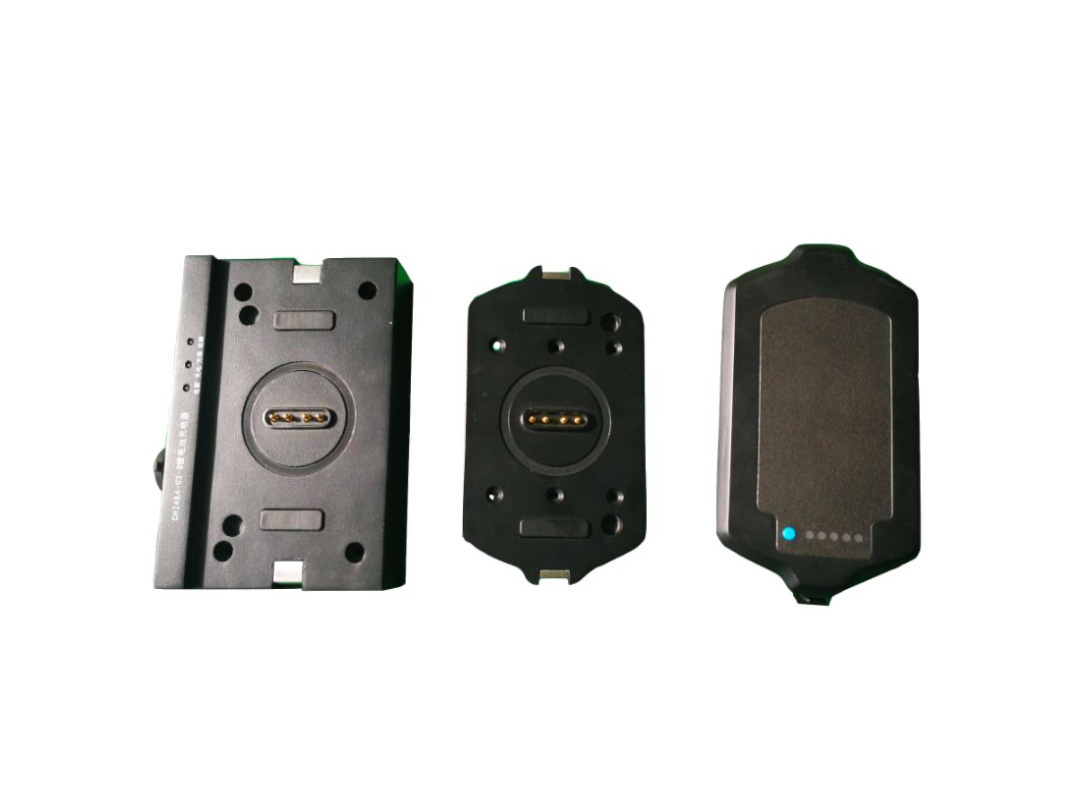 On-board lithium batteries (designed and manufactured by Henan Puhang Electronic Equipment Co., Ltd.)
recommend Reading
2024-02-02
2024-02-02
2024-02-02

Contact E-mail:
WhatsApp:
Company Address:
Building 31, Sino-German Industrial Park, Yibin District, Luoyang City, Henan Province